From900to3,300trucksaday,withoutaddingmoregates
Confidential container terminal in Santa Catarina, Brazil
The problem
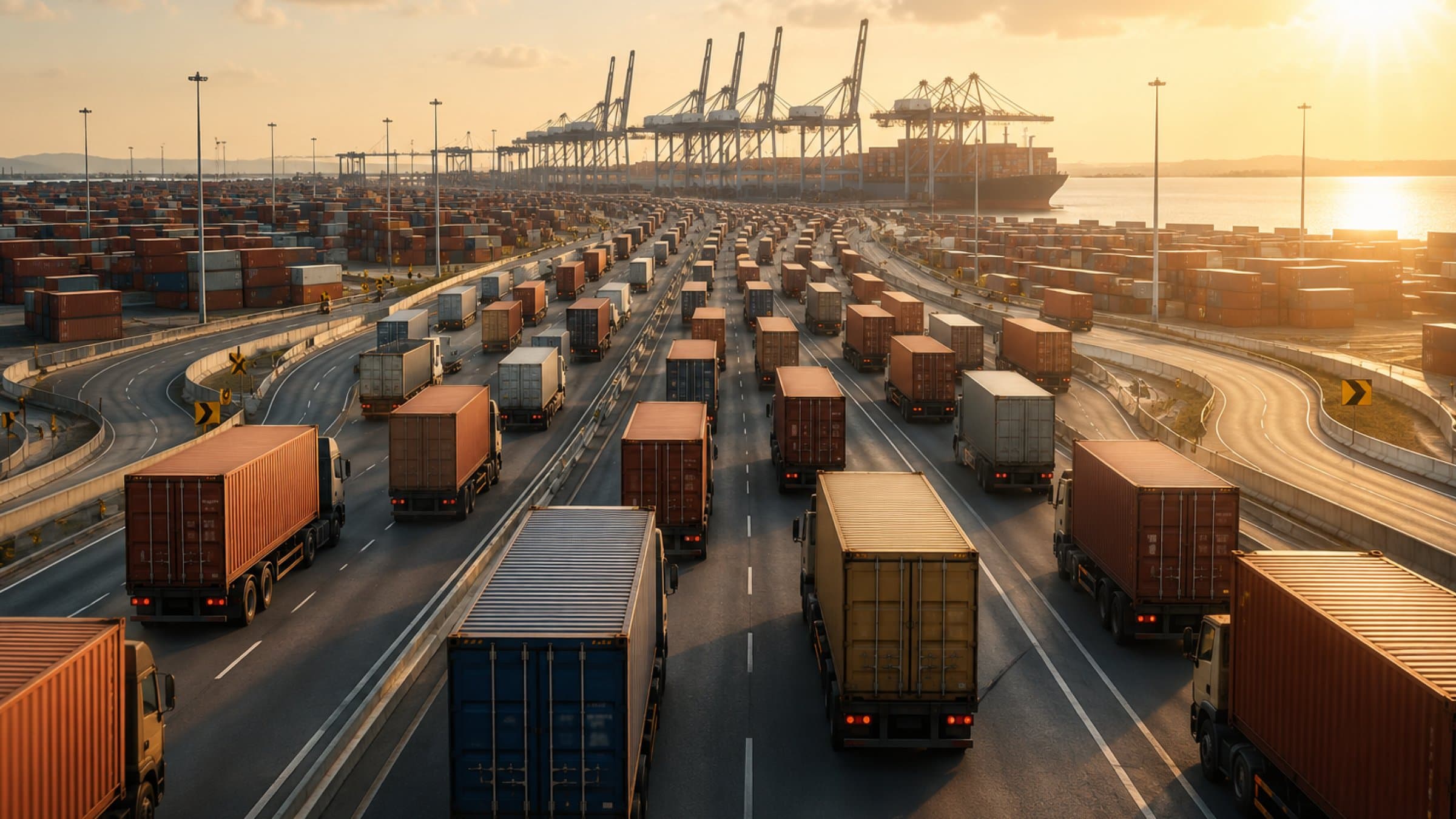
Relentless truck flow
A container terminal isn't only constrained by the sea. It's constrained by the gate. Every container coming off a ship has to leave on a truck. And the gate, where truck and system meet, is where the whole operation narrows.
When that bottleneck appears it doesn't stay inside the port: it spills onto the highway, into the waiting yard, and into the schedule of every carrier that depends on the terminal.
Where the bottleneck forms
The arithmetic the gate has to close every day
The ship berths
- Discharge isn't done until the cargo leaves the yard;
- The berthing window has a closing time.
The trucks arrive
- 1 truck = 1 container;
- Every pickup depends on a booked slot.
The yard piles up
- Containers already stacked, waiting for pickup;
- Internal moves competing for the same space.
And the ship has to load
- Export cargo loading in parallel.
The scale of the bottleneck in numbers
The ship has a berthing window and the yard has a physical limit.
4,000
Containers moved per day
1.5M
Containers moved per year
900
Truck flow per day
First step
Observe
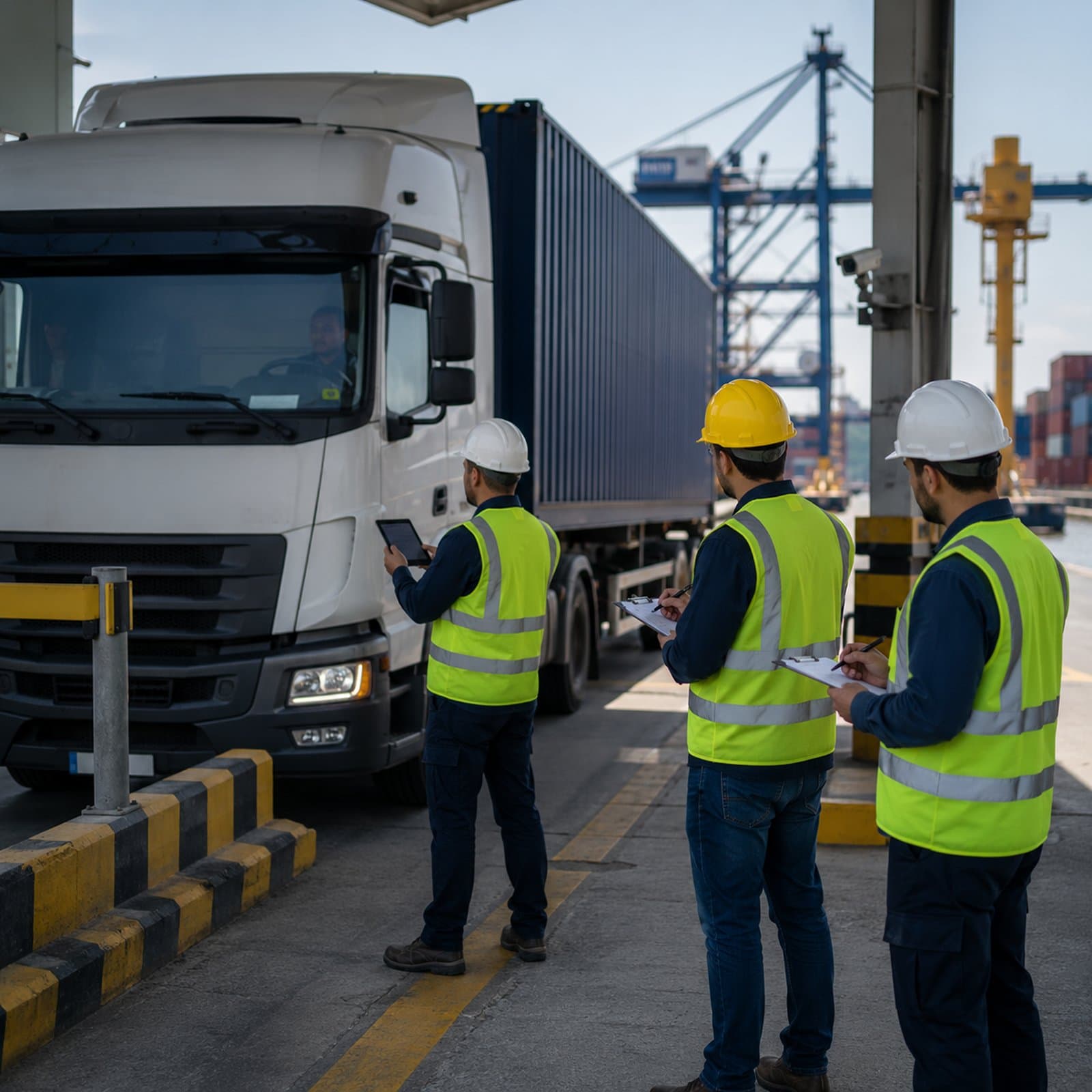
Before proposing any technology, our team ran a full analysis of the flows and processes to deeply understand the operation as it actually runs, not as the org chart describes it. We followed the operators' day-to-day at the gate across different shifts, mapping every point that affected the efficiency of trucks entering and leaving the terminal.
This is the phase where the details no document records showed up: the shortcut an operator invented, the screen nobody uses, and the effort wasted on manual, repetitive tasks.
We ran a careful assessment of every point of impact:
- The existing control system
- OCR integrations
- Team training and qualification
- Manual, repetitive processes
- Supporting operational apps
- Weighbridge integration
- Customs compliance
Second step
A new gate control system
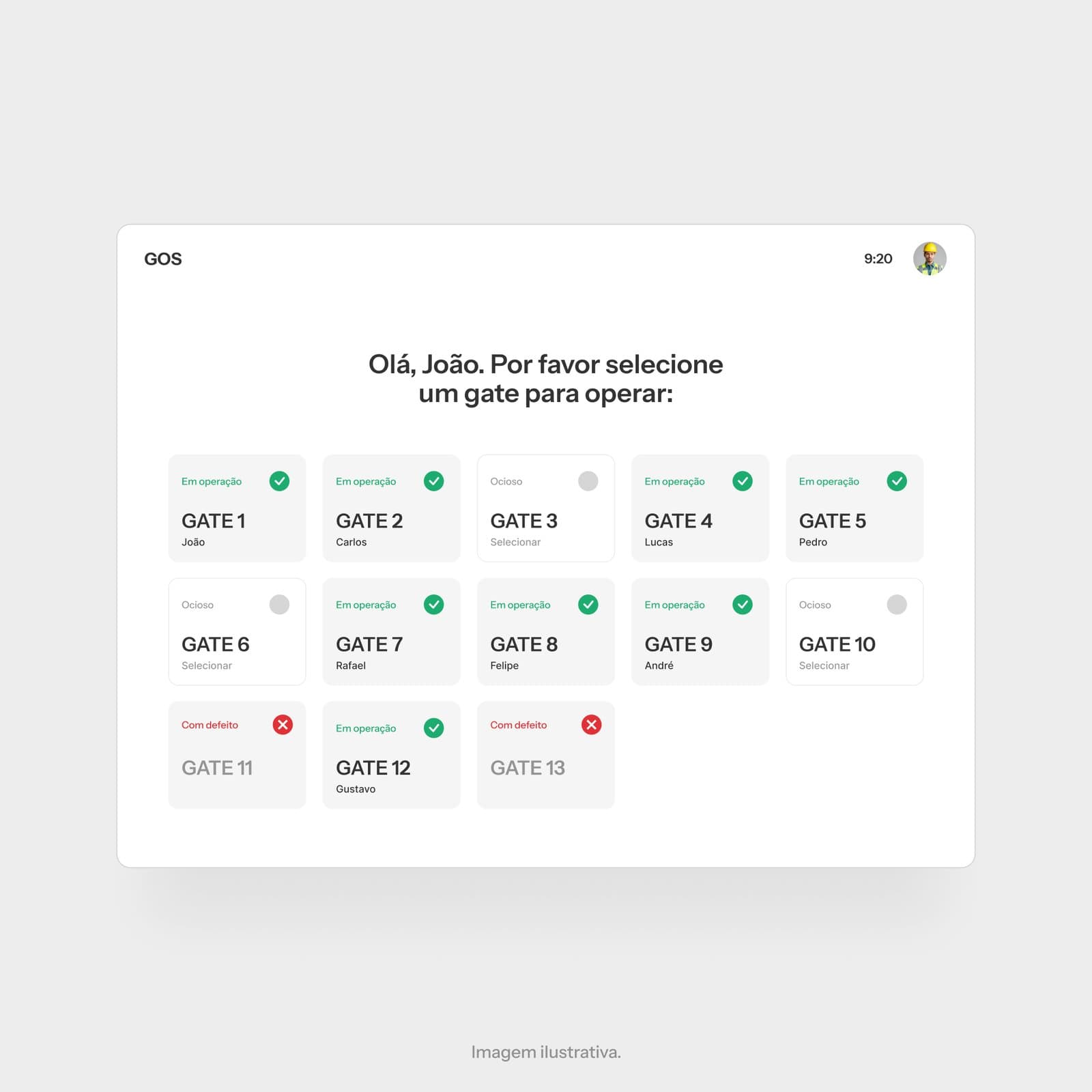
We rebuilt the system that controls trucks entering and leaving, with custom integrations and a far more intuitive interface. The priority here wasn't adding features: it was cutting the number of decisions and clicks from the moment a truck reaches the gate to the moment it clears the terminal.
The dashboard now shows every gate on one screen (running, idle or faulty), with the day's operations, imports and exports always in view.
Among the other improvements, a few stand out:
- A far more dynamic, faster, smoother process
- Camera, weighbridge and API integration
- A more intuitive, friendlier interface
- A shorter learning curve
- Simpler maintenance and evolution
- Full customs compliance
That alone doubled the number of trucks within weeks: from 900 to 1,800 trucks a day.
It still wasn't enough for us.
The detail nobody saw
Two opposite problems, on the same day
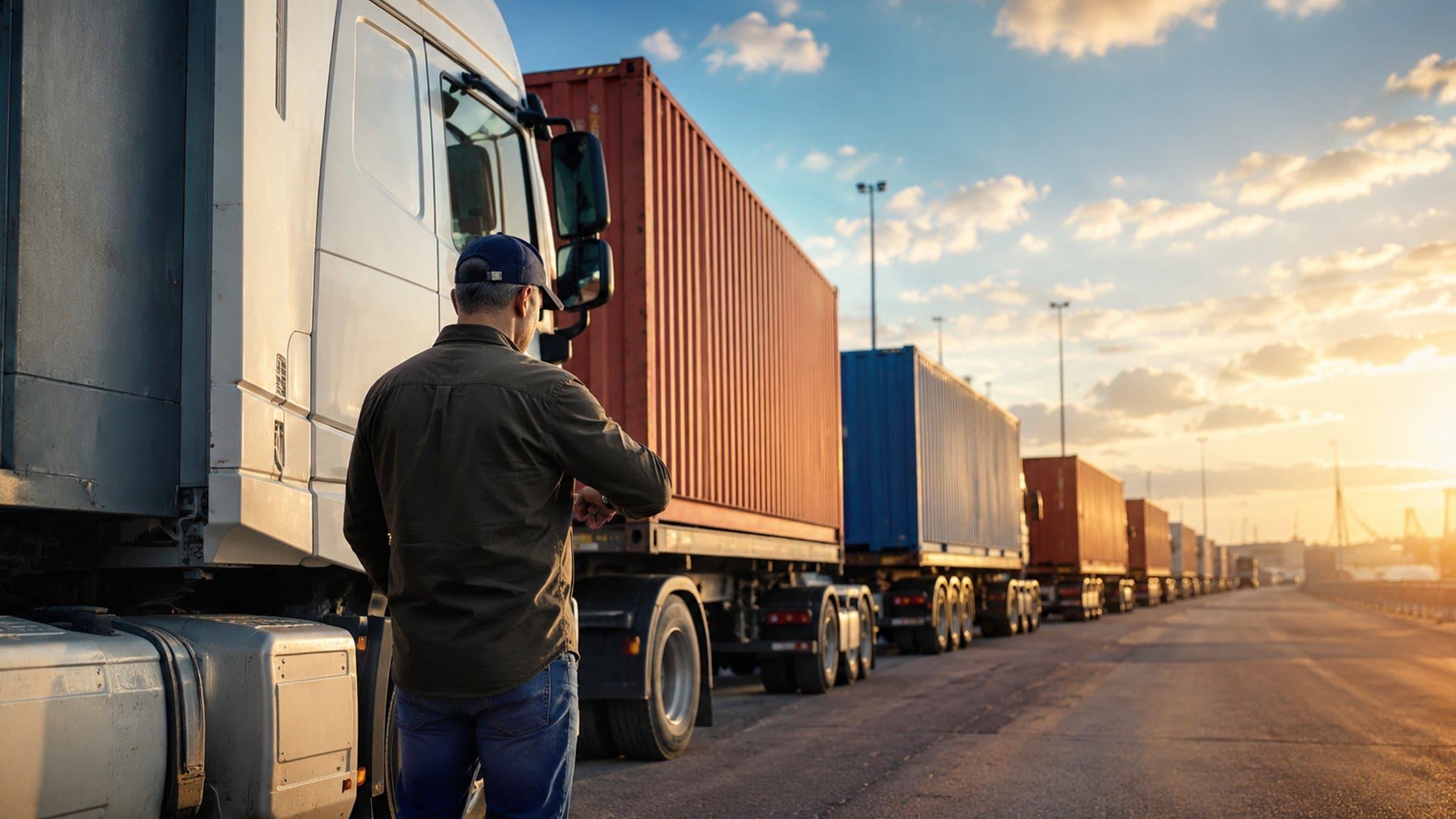
Back on the ground, we noticed a small but constant number of trucks parked outside the port, simply waiting hours for their booking window.
On the same shift, at the other end, there were drivers stuck in traffic or still kilometres away, unable to make their booked slot at all. Two symmetrical failures: an idle window on one side, a missed window on the other. The gate was technically fast and still underused.
Third step
The driver app
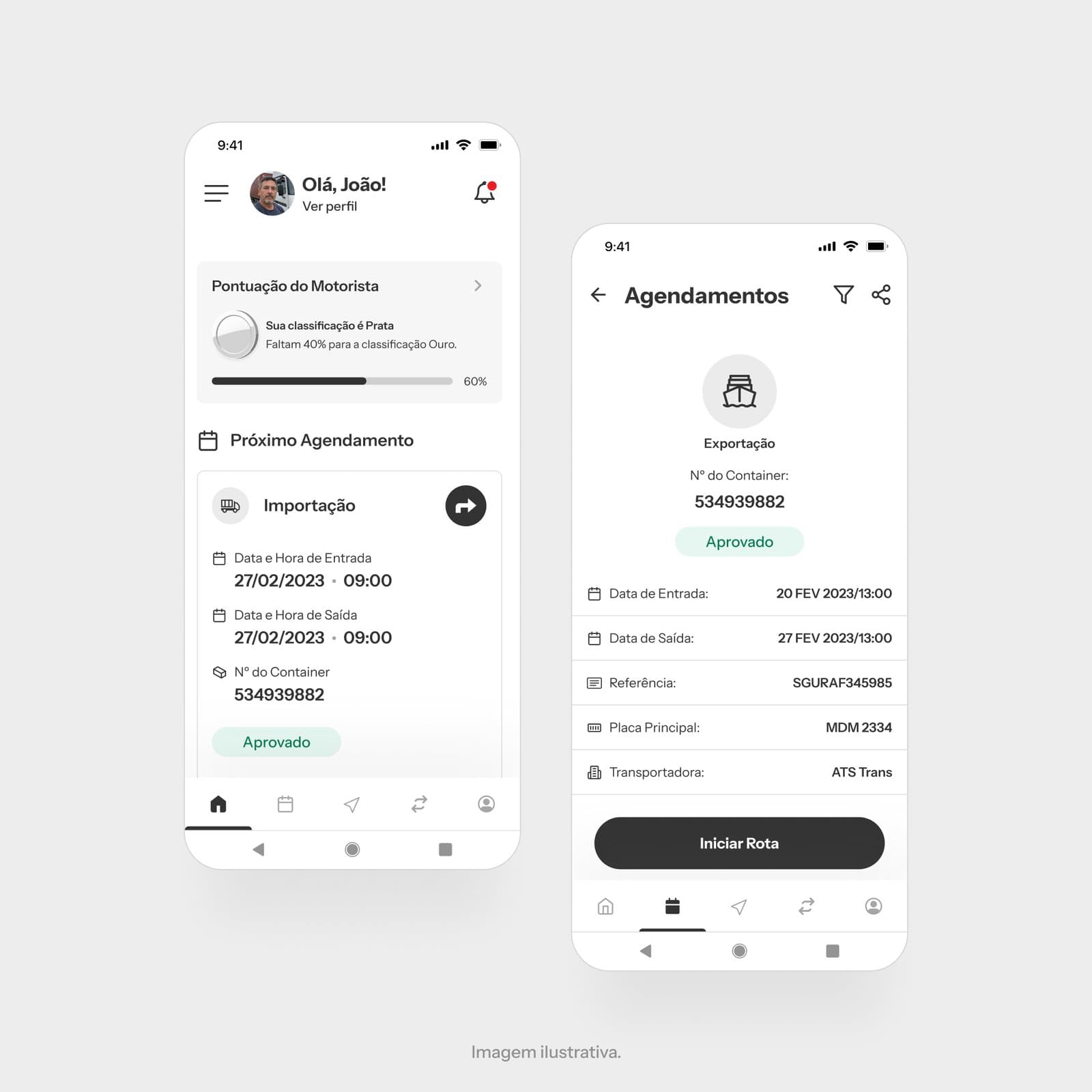
If the problem was the gap between the booking and the reality of the road, the place to solve it was the driver's phone. We built the app that ties the booked slot to the truck's actual position.
Drivers now track visits, container, carrier, entry and exit times, and rate the experience after each operation, which gave the terminal a continuous stream of data about its own gate.
- Predictive technology
- Cargo scheduling
- Automated slot adjustment
- Geolocation
- Automated data capture
How it works
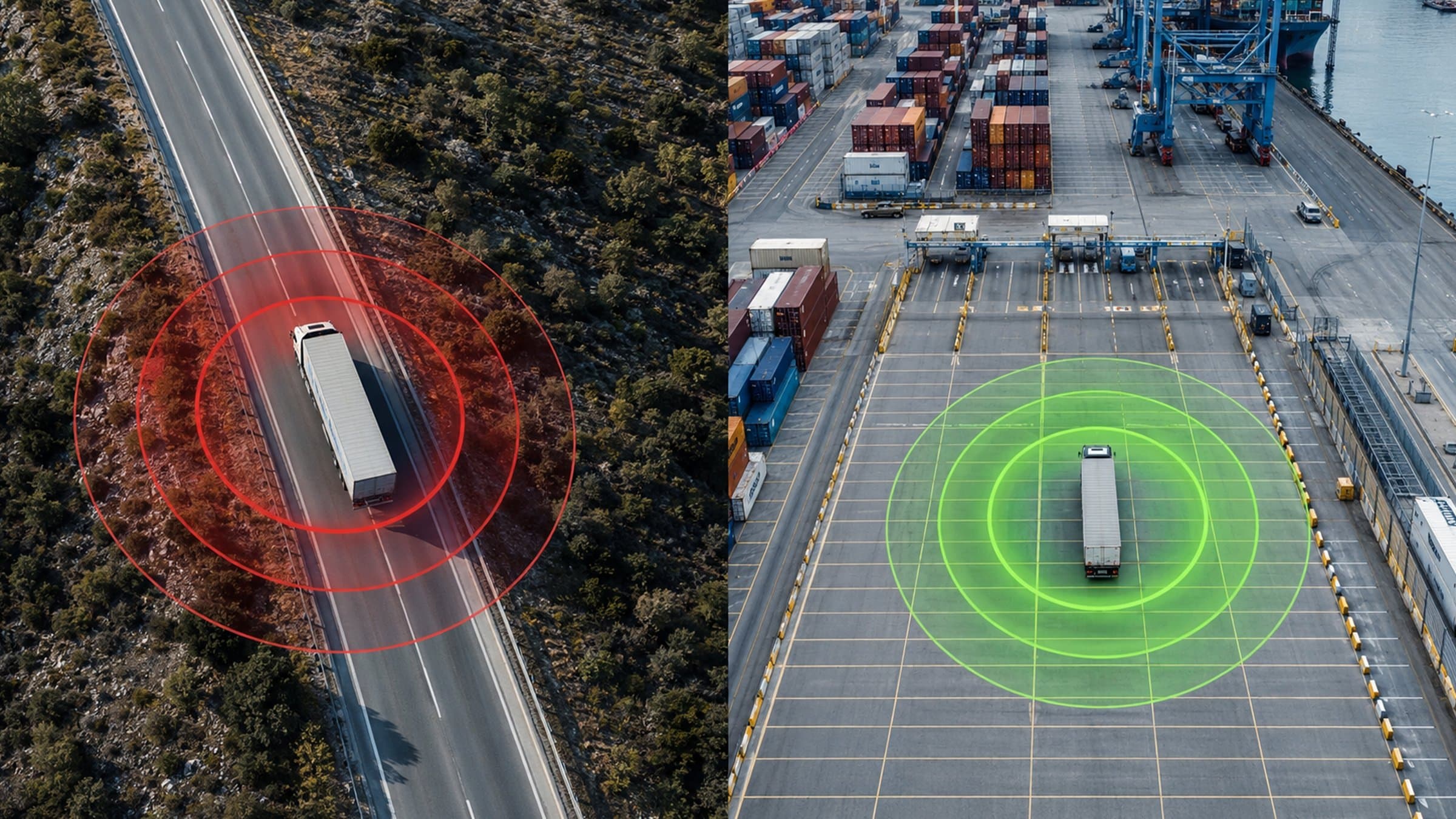
The empty window stops existing
Geolocation tells the system that driver 1 won't make the slot, and it automatically swaps in driver 2, who is already parked nearby, waiting for a window of their own.
Nobody loses a slot to traffic and no gate window sits empty.
The result
A 3.6× increase in daily gate capacity
The gain doesn't stay at the gate. By the same arithmetic, the 4,000 containers of one vessel call stop taking nearly four and a half days to clear and start taking a little over one, which gives the ship back its berthing window and the yard back its space.
before
900trucks per day
after
3,300trucks per day
Recognition
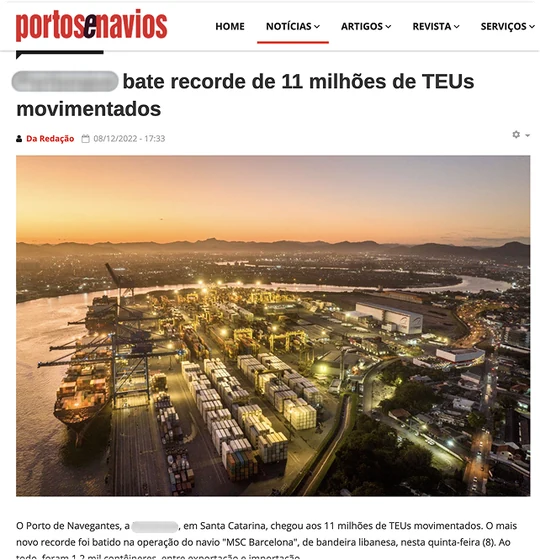
The gain left the dashboard and made the news
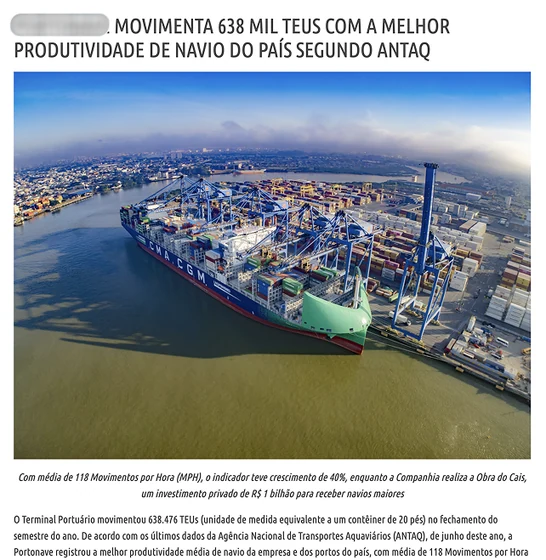
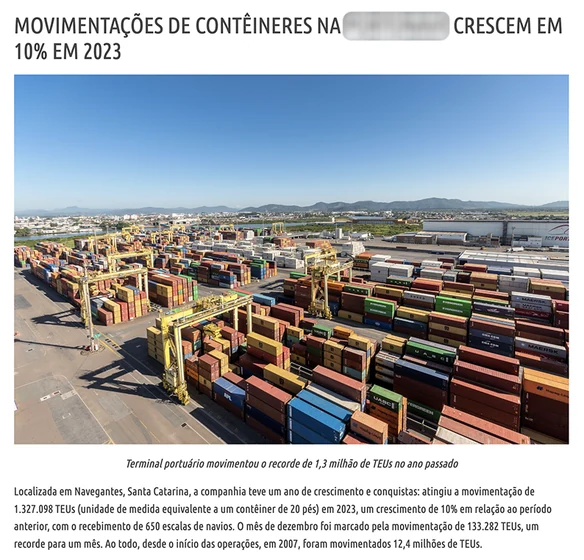
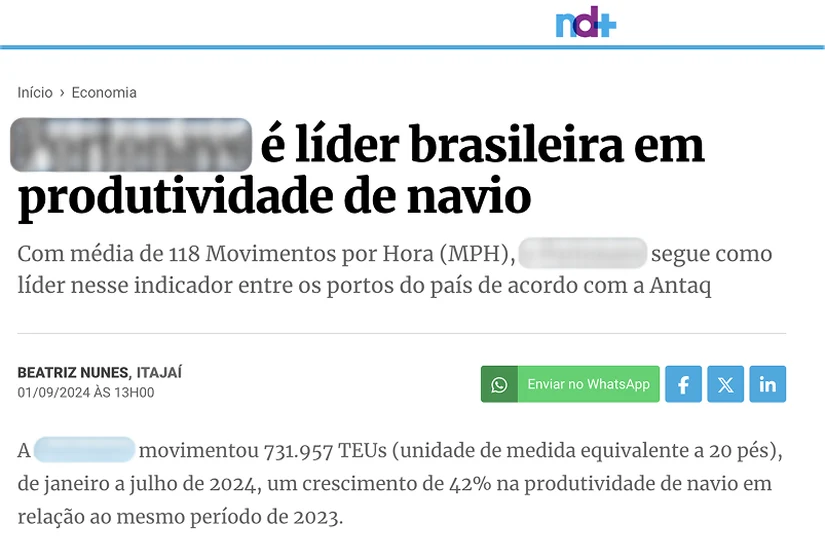
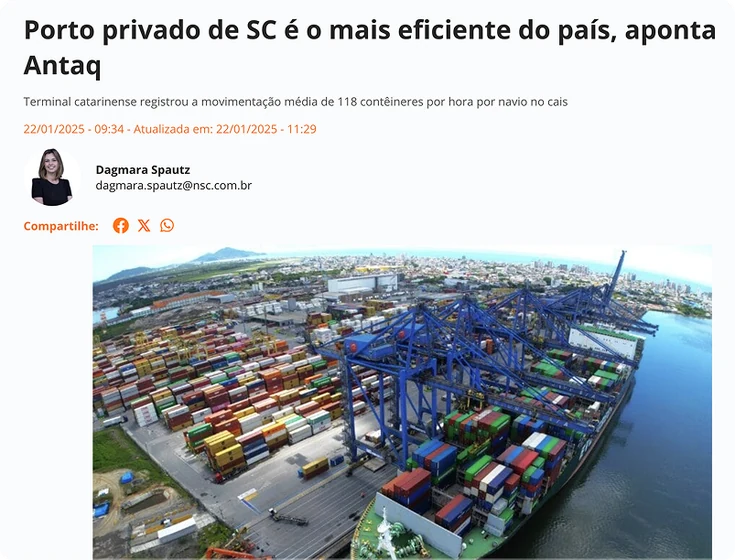
The terminal began breaking its own truck-reception records and ranking among the country's most productive operations in per-ship container moves, with double-digit growth in container throughput.
None of it required new civil works, new gates or a bigger fleet. It required watching the operation closely, rebuilding the interface where the decision happens, and using geolocation data to make that decision at the right moment.

What comes next
We use artificial intelligence to build high-impact projects for the operation
It's what we do with some of the largest companies in the world: understand the operation as it actually runs, find the point where time is lost, and rebuild only what sets the pace.
Get in touch and receive a free diagnostic from our team of specialists: where your bottleneck is, what it costs per hour of operation, and what is worth integrating first.
More case studies